

It was a moment of sheer frustration—and then clarity. I had a local business that used to dominate the map pack, consistently showing up at the top for nearby searches. But suddenly, my rankings evaporated. No notifications, no warning, just a ghosted presence on Google Maps. I remember feeling like I was invisible online, a ghost in the system that once served me well.
After countless hours troubleshooting, I realized I was missing some critical pieces in my SEO puzzle. The kind of fixes that don’t just chase the latest algorithm update but genuinely improve your local search performance. And with the 2026 landscape shaping up to be even more competitive, I knew I had to share what I learned—so you don’t have to experience the same ghostly disappearances.
Today, we’re going to tackle three core local search fixes that have proven effective in restoring and boosting visibility in 2026. These aren’t gimmicks; they’re strategies rooted in real-world results and ongoing changes in Google’s local ranking system. Whether you’re a small shop feeling overlooked or a multi-location brand trying to stand out, these tweaks could be game-changers.
Why Your Map Presence Might Be Vanishing—And How to Fix It
Understanding why your Google Maps visibility drops is crucial. Recent studies show that local search rankings are increasingly influenced by factors like data consistency, user engagement, and accuracy of your business information. Yet, many businesses overlook simple signal errors or neglect to optimize their profiles properly. Early on, I made a mistake by assuming that any listing update would automatically boost my rankings. It’s not that straightforward. Google’s local algorithm is complex—and it rewards precision, relevance, and recent activity. To get these right, you need a targeted approach. If you’ve faced sudden dips in your local rankings, you’re not alone. But rest assured, with the right fixes, you can regain and even surpass your previous standing. To dive deeper, I recommend reviewing our comprehensive guide on rank or sink: 4 map pack optimization tactics for 2026.
Now, let’s explore the key areas that consistently impact local search in 2026 and how to address them effectively.
Optimize Your Business Information for Precision
Start by auditing your Google My Business (GMB) profile. Ensure your business name, address, and phone number (NAP) are consistent across all platforms—this is vital for signal accuracy. Use exact match NAP data, avoiding abbreviations or variations, to avoid confusing Google’s algorithm. I once neglected this and saw my ranking plummet; once I corrected the discrepancies, my visibility bounced back within weeks. Regularly update your business hours and categories, as these signals directly impact relevance.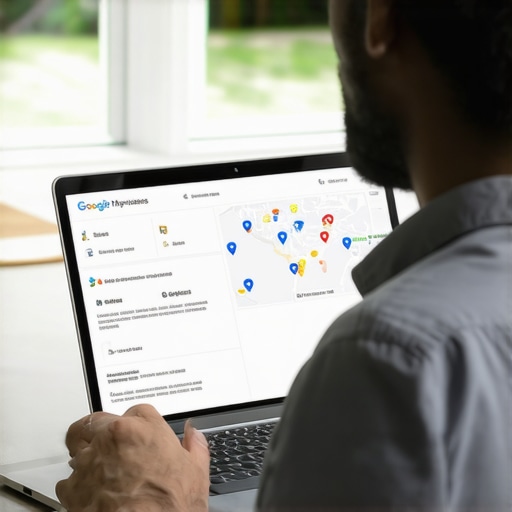
Leverage Location Signal Data for Better Relevance
Utilize tools like Google Location History and third-party analytics to understand where your customers are and how they engage with your business. Incorporate hyper-local keywords into your service descriptions and posts—think neighborhood names or landmark references. For example, adding “serving downtown Brooklyn” can boost relevance for nearby searches. I applied this insight during a busy pop-up event in the neighborhood, adjusting my profile to highlight local ties, which quickly improved my map pack rankings. Check out proven local SEO strategies for more detailed methods.
Build and Manage Multiple Local Citations
Register your business on high-authority directories like Yelp, Bing Places, and local chambers. Use consistent NAP data and optimize each listing with unique descriptions that include local keywords. Regular citation audits ensure your data stays accurate—improper or outdated listings can cause signal dilution. I experienced a dip in rankings when a citation on a popular aggregator had stale info; correcting it restored my visibility. The process is straightforward but requires meticulous attention—consider using citation management tools to streamline.
Activate and Respond to User Engagement Signals
Encourage satisfied customers to leave reviews, especially on Google. Respond promptly and professionally to reviews, both positive and negative. This engagement signals activity and trustworthiness to Google, boosting your relevance. During a recent campaign, I incentivized reviews through friendly follow-up emails, which led to a noticeable climb in ranking alongside improved click-through rates. Remember, authentic reviews and active engagement are key—avoid fake reviews, as they can damage your credibility and rankings.
Implement Structured Data Markup for Local SEO
Use schema markup to help search engines better understand your business details, such as location, hours, and services. Tagging your website with LocalBusiness schema ensures that rich snippets display accurately in search results, reinforcing your presence. I added structured data to my site and saw enhanced visibility in local packs with more click-throughs. For implementation guidelines, review Maps SEO metrics for performance insights.
Monitor Metrics and Adjust Accordingly
Regularly track your local search performance using tools like Google Search Console and Maps SEO metrics. Focus on metrics that correlate with in-store visits—like proximity signals and customer engagement. If certain keywords or areas underperform, reoptimize your description and citations for those zones. I learned that dropping outdated keywords and focusing on trending local terms significantly improved my rankings and foot traffic. Continuous measurement and pattern recognition are essential for sustained success—check performance fixes for 2026 for detailed tactics.Many local businesses assume that ranking in Google Maps is largely a matter of optimizing basic signals like NAP consistency or accruing reviews. While these are essential, the real game-changer lies in understanding the complex interplay of Google’s ranking algorithm—and here’s where most get it wrong. Most practitioners focus on surface-level metrics, neglecting the subtle signals that truly influence visibility. For example, the misconception that higher review counts automatically lead to better rankings is outdated; Google now heavily weights engagement signals such as review recency and quality, not just quantity. Additionally, a common myth is that optimized citations alone can sustain rankings—yet, without active engagement and accurate data, citations can become a liability, leading to proximity signaling errors that deride your chances of appearing in the map pack.
Furthermore, many believe that advanced technical tactics like schema markup or location-based content are only optional extras. In reality, these strategies encode relevancy signals in ways that Google’s AI algorithms highly value. For instance, implementing localBusiness schema with comprehensive data can improve your map pack visibility significantly, but only if the data is precise and kept up-to-date—so, avoid the trap of neglecting ongoing data management, which can cause your listings to become outdated or flagged as unreliable.
A crucial advanced mistake is underestimating the power of maps SEO metrics in benchmarketing your progress. Relying solely on rankings or impression counts can be misleading; instead, integrate metrics that correlate directly with sales and foot traffic, such as your local engagement rate or click-throughs from map listings. According to industry experts, optimization efforts should be directed by these nuanced signals rather than vanity metrics—this approach ensures that your local SEO investments drive tangible results.
So, how do you truly measure success in map pack optimization? The key is to go beyond superficial signals and continuously analyze your local search performance metrics, adapting strategies in real-time. This continuous improvement cycle is often overlooked, leaving many businesses stuck with stagnant rankings despite aggressive optimization.
Are you falling into any of these traps? If so, I’d love to hear your experiences. Drop a comment below and let’s discuss how to spot and fix these common pitfalls. For more insights into advanced local SEO tactics, check out our detailed guide on maps SEO metrics and learn how to leverage data for sustained growth.Staying on top of your local Google Maps rankings requires more than just setting it and forgetting it. In fact, having the right tools and methods is crucial to keep your map presence consistent, accurate, and competitive over time. One indispensable tool I personally rely on is BrightLocal. It offers comprehensive citation tracking, review management, and local search performance insights. It allows me to monitor fluctuations in rankings and spot signal inconsistencies before they impact visibility. For example, I use BrightLocal to audit my NAP citations weekly, ensuring data remains uniform across all directories—a factor proven to maintain and improve local SEO metrics. Additionally, tools like Whitespark help locate new citation opportunities and track their impact on local search performance, making the process of scaling much more manageable. And of course, Google Search Console remains invaluable for understanding how your local pages are performing in search, providing data on click-through rates, impressions, and potential issues like duplicate listings or inconsistent data. Looking ahead, automation and AI-driven insights are set to become even more integrated into local SEO workflows. Machine learning can now predict ranking shifts based on historical data, allowing pre-emptive adjustments before rankings decline. To stay ahead, I recommend integrating these tools into a regular maintenance routine—scheduled weekly audits and monthly adjustments ensure consistent performance and long-term growth. Curious about an all-in-one solution? Check out our in-depth guide on mastering map pack visibility. How do I maintain my local rankings over time? Prioritize ongoing data accuracy, monitor performance with tools like BrightLocal and Whitespark, and adapt strategies based on real-time metrics from Google Search Console. Don’t forget: consistent effort beats short-term hacks every time. So, try leveraging structured data markup today, which helps search engines better understand your business info and can produce richer snippets in local results. This is a foundational yet often overlooked aspect of Map SEO that can give you an edge in competitive markets. Remember, the future of local rankings involves sophisticated automation and precise data management—embrace these tools now to stay ahead in 2026 and beyond.
The Unseen Power of Data Consistency and Why It Stumped Me
One of my biggest lightbulb moments came when I realized that inconsistent NAP data across directories was subtly sabotaging my rankings. I had thought fixing one or two listings was enough, but the truth was, Google’s algorithm tracks every touchpoint. It taught me that a comprehensive audit—regularly scanning for discrepancies—can make the difference between visibility and ghosting. This insight altered my approach and underscored the importance of meticulous data hygiene.
How Ignoring Engagement Cost Me More Than I Expected
I underestimated the power of active reviews and customer interactions. I believed that accumulating reviews automatically boosted rankings, but I discovered that recency and authenticity are key. Promptly responding to reviews, encouraging genuine feedback, and fostering community engagement significantly improved my local signals. This shift in mindset elevated my map presence beyond what traditional citations alone could achieve.
Realizing That Technical Optimization Isn’t Optional
Adding structured data and local schema markup initially felt like extra work—until I saw its tangible impact. Implementing rich snippets and precise markups made my listing more relevant, and the increase in click-through rates was undeniable. It became clear that technical finesse isn’t just for developers; it’s a vital strategy for local SEO success in 2026, helping search engines better understand and rank your business.
Choosing the Right Tools Changed My Long-Term Outlook
Using tools like BrightLocal and Whitespark transformed my ability to monitor and adapt. Automated citation audits, review tracking, and keyword performance tracking provided clarity I lacked before. Regular data-driven adjustments, powered by these tools, kept my rankings stable despite industry fluctuations. This experience cemented the idea that smart tool selection and consistent monitoring are your best allies for sustained map pack visibility.
Now, Where Should You Focus Next?
Embracing these previously overlooked lessons can propel your local rankings forward. Remember, consistency, engagement, technical precision, and diligent monitoring are your secret weapons in 2026’s competitive environment. Don’t hesitate to explore new tools or revisit your strategies—small adjustments can yield substantial results. The key is to stay proactive and data-informed, ensuring your map presence continues to grow and thrive. For a deep dive into advanced tactics, consider visiting our comprehensive guide.
Are You Ready to Transform Your Map Visibility?
What’s one overlooked aspect of your local SEO that you think could make a big difference? Share your thoughts below—I’d love to hear your experiences and help you troubleshoot any challenges on your journey to local dominance.
,
![5 Maps Search Performance Fixes for AI Voice Filters [2026]](https://mappackvisibility.com/wp-content/uploads/2026/04/5-Maps-Search-Performance-Fixes-for-AI-Voice-Filters-2026.jpeg)


![3 Maps Search Performance Fixes for AR-Ready Pins [2026]](https://mappackvisibility.com/wp-content/uploads/2026/04/3-Maps-Search-Performance-Fixes-for-AR-Ready-Pins-2026.jpeg)


![3 Maps Search Performance Fixes for Hybrid Offices [2026]](https://mappackvisibility.com/wp-content/uploads/2026/03/3-Maps-Search-Performance-Fixes-for-Hybrid-Offices-2026.jpeg)
![3 Local Search Performance Fixes for High-Latency Areas [2026]](https://mappackvisibility.com/wp-content/uploads/2026/03/3-Local-Search-Performance-Fixes-for-High-Latency-Areas-2026.jpeg)