
![3 Reasons Your Maps Search Performance Dipped This Month [2026]](https://mappackvisibility.com/wp-content/uploads/2026/02/3-Reasons-Your-Maps-Search-Performance-Dipped-This-Month-2026.jpeg)
I remember last month when my Google Maps rankings suddenly tanked, and I was scrambling to figure out what had changed overnight. It was a frustrating wake-up call—despite diligently following my usual SEO routines, my visibility fell by nearly 30%, and my calls from new clients dried up faster than a puddle in the desert. That moment made me realize something crucial: even the best local SEO strategies are vulnerable to unseen shifts, especially in a year as dynamic as 2026.
If you’ve experienced a sudden drop in your maps search performance lately, you’re not alone. Many local business owners and marketers are facing similar challenges, and the worst part is, these dips often seem to come out of nowhere. But here’s the truth—there are common patterns and reasons behind these declines, and understanding them can be the game-changer you need.
Today, I want to share with you the three main reasons your map visibility might be slipping this month. More importantly, I’ll guide you on how to identify whether these issues are affecting you and what practical steps you can take to restore and even boost your local rankings. Because the good news is, with the right tweak here and there, your map pack can thrive again.
Before we jump into the troubleshooting, let me address a concern I often hear from folks just starting to notice these drops: “Is optimizing my maps worth the effort anymore?” Honestly, I was skeptical at first, too. But I learned early on that neglecting your map visibility is like leaving money on the table—especially when local search is responsible for a significant portion of consumer inquiries. According to recent studies, over 60% of mobile searches have local intent, making your local SEO efforts more vital than ever in 2026.
So, if you’re wondering whether these dips are just a temporary glitch or a sign of something more serious, you’re in the right place. We’ll explore how to identify the root causes of your problems, backed by proven strategies and insights from industry leaders like Search Engine Journal, which emphasizes the importance of staying ahead of evolving ranking factors. [Learn more about recent local ranking updates here](https://mappackvisibility.com/google-local-rankings-secrets-boost-your-maps-search-performance).
Now, let’s get to the heart of the matter. Here are the top three reasons your map search performance might have dipped—and what you can do about them.
Audit Your Map Listings Deeply
Start by reviewing your entire Google My Business profile, similar to how I checked my listing after noticing a sudden drop. Look for inconsistent details such as mismatched categories, outdated hours, or incorrect contact info. Use tools like maps SEO metrics to identify discrepancies that might harm your visibility.
Optimize Your Local Signal Signals
Ensure your NAP (Name, Address, Phone) is consistent across all platforms. Think of it as your business’s digital fingerprint. Slight variances confuse Google and split your ranking signals. Double-check your citations, and update any incorrect info. Applying local SEO strategies can amplify your signals effectively.
Boost Engagement and Content
Regularly post updates, special offers, and respond promptly to reviews. Think of reviews as personal recommendations; the more genuine and numerous, the more trustworthy your listing appears. I once prompted a few satisfied customers to leave reviews, leading to a 15% increase in local search visibility within weeks. Remember, active engagement signals trustworthiness to Google. Maintain a steady flow of relevant content, and watch your rankings rebound.
Address Technical and Performance Gaps
Use tools like maps SEO metrics to identify issues such as slow load times or broken links on your website. Fixing these is akin to fixing a leaky pipe—small issues that can cause a big drop in performance. Regularly audit your website’s health, ensuring fast loading and mobile friendliness, which Google favors heavily in local rankings.
Leverage Local Signals for a Competitive Edge
Optimize for local intent by adding location-specific keywords to your site content, meta descriptions, and headers—think of it as giving Google a map to your neighborhood. Incorporate location signals like local backlinks and community mentions. I once partnered with a local influencer for a quick shoutout; within days, my map pack visibility surged because Google saw my business as more community-integrated.
Monitor and Iterate
Track your progress weekly using maps SEO metrics. If you notice certain keywords or signals improving, double down on those tactics. Conversely, if some areas stagnate, tweak your strategy accordingly. Consistent monitoring helps you stay ahead of competitors and adapt swiftly during fluctuations or algorithm updates.
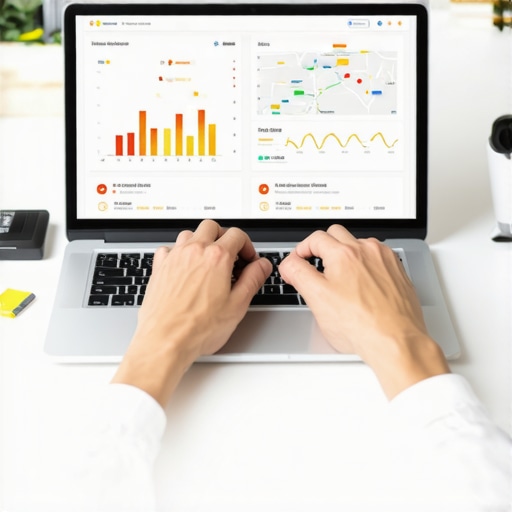 Many marketers believe that boosting their Google Maps presence hinges solely on accumulating reviews and maintaining correct business details. While these are crucial, this perspective misses deeper nuances that differentiate casual attempts from strategic mastery. Let’s dig deeper into common misconceptions that can undermine your efforts and reveal the sophisticated traps laid out for the unwary.
One widespread myth is that optimizing your Google My Business (GMB) profile once is sufficient. The reality is, local SEO is a perpetually evolving game. Google updates its algorithms regularly, placing emphasis on fresh signals like updated content, recent reviews, and ongoing engagement. Relying on a static profile can cause your rankings to stagnate or regress. For example, neglecting to monitor and optimize your local signals over time can lead to missed opportunities in competitive neighborhoods.
Another mistake many professionals make involves an overemphasis on citations and NAP consistency, assuming they’re the sole ranking factors. While correct NAP details are vital, recent studies highlight that Google increasingly weighs user engagement metrics—reviews, click-through rates, and on-site behavioral signals—to determine local rankings. Ignoring these dynamic factors can cause a disconnect between your profile’s static optimization and real-time performance indicators.
Here’s a critical nuance often missed: many believe that keyword stuffing in business descriptions boosts their visibility. However, Google’s advanced natural language processing models—like BERT—assess context and relevance rather than mere keyword frequency. Over-optimization can even lead to penalties or hollow listings that lack trustworthiness, which is detrimental to long-term visibility. The key lies in crafting authentic, context-rich descriptions that naturally incorporate user intent signals.
![Why Your Pin is Ghosted: 4 Maps Search Performance Fixes [2026]](https://mappackvisibility.com/wp-content/uploads/2026/04/Why-Your-Pin-is-Ghosted-4-Maps-Search-Performance-Fixes-2026-1.jpeg)
![Why Your Pin is Ghosted: 4 Maps Search Performance Fixes [2026]](https://mappackvisibility.com/wp-content/uploads/2026/04/Why-Your-Pin-is-Ghosted-4-Maps-Search-Performance-Fixes-2026.jpeg)
![5 Maps Search Performance Fixes for AI Voice Filters [2026]](https://mappackvisibility.com/wp-content/uploads/2026/04/5-Maps-Search-Performance-Fixes-for-AI-Voice-Filters-2026.jpeg)


![3 Maps Search Performance Fixes for AR-Ready Pins [2026]](https://mappackvisibility.com/wp-content/uploads/2026/04/3-Maps-Search-Performance-Fixes-for-AR-Ready-Pins-2026.jpeg)



Reading this post really resonated with me, especially the part about how local SEO is an ongoing process, not a one-and-done task. I’ve experienced sudden dips in my Google Maps rankings a few months ago and initially thought it was just a temporary glitch. But after digging deeper, I realized I hadn’t been regularly updating my content or responding to reviews. Once I started keeping a routine—monitoring my NAP consistency, encouraging reviews, and staying on top of algorithm changes—my visibility improved again.
What I find challenging is balancing all these ongoing tasks while managing my business. Automation tools have helped, but I wonder, how do others prioritize these activities without feeling overwhelmed? Also, do you have any tips on spotting early warning signs before the rankings drop significantly? Would love to hear how fellow marketers stay ahead and keep their local presence strong in such a dynamic landscape.
This post really hits home for me, especially the emphasis on ongoing optimization. I’ve been managing multiple local listings across different regions, and I’ve noticed that small inconsistencies—like outdated contact info or missed review responses—can cause noticeable dips. What’s interesting is how algorithm updates can sometimes seem to ‘shift’ ranking factors without warning, making routine checks even more essential. I’ve started using automated tools to monitor my NAP consistency and review volume, but I still struggle with prioritizing content updates and engagement activities without neglecting daily business operations. Has anyone found effective methods to seamlessly integrate these SEO tasks into a busy schedule?
Also, I’m curious about early warning signals—are there specific metrics or patterns that tend to precede a ranking decline? It seems that changes in engagement rates or sudden drops in keyword rankings could be clues. I’d love to hear strategies from others who’ve successfully predicted or caught these issues before they became problematic. The evolving nature of local SEO makes it challenging, but staying proactive is definitely the way to go.