Ever had that sinking feeling when you check your business’s map listing and see competitors stealing the spotlight, even though you know your service is better? I’ve been there, staring at my Google Maps listing with frustration, wondering why my potential customers couldn’t find me. It’s a common story, but here’s the lightbulb moment I want to share: your map presence isn’t just about being listed; it’s about being *visible* in the right places, at the right time.
Why Local Map Visibility Matters More Than Ever
In today’s local search landscape, appearing on Google Maps isn’t just a bonus — it’s essential. According to a BrightLocal survey, 78% of local mobile searches result in an offline purchase, and most of these happen after discovering a business on Google Maps. That’s a huge chunk of potential income for any local business, yet many still overlook the importance of effective map SEO strategies.
When I first started optimizing my map listing, I made a critical mistake: I focused solely on filling out my profile without paying attention to the key metrics that actually influence rankings. It’s easy to fall into this trap because the process seems straightforward: add your info, post photos, maybe some reviews. But the truth is, Google uses a complex set of factors—like proximity, relevance, and prominence—to decide who shows up first. Ignoring these can leave you invisible to those who matter most.
Today, I’ll walk you through proven local SEO strategies that will help your business stand out in Google’s map pack, driving more foot traffic and calls. Think of this as your personal playbook to dominate local search results in 2024. Ready to get those rankings climbing? Let’s dive into what works.
Is improving map rankings actually worth the effort?
I get it—spending time on SEO can feel like chasing a moving target. Early on, I tried to game the system with cheap tricks, only to realize that genuine, consistent optimization delivers lasting results. According to Moz, local SEO efforts that focus on authentic signals—like reviews, accurate NAP (Name, Address, Phone number), and optimized categories—are proven to boost visibility over time. So, yes, investing in map SEO strategies is absolutely worth it if you want real growth.
If you’ve struggled with your map rankings or felt overwhelmed by conflicting advice, you’re not alone. The good news is that with a clear, methodical approach, you can improve your presence and attract more local customers. And that’s exactly what I’ll help you achieve in this guide. Curious? Keep reading to uncover the most effective tactics for 2024.
Optimize Your Business Profile for Maximum Impact
Start by claiming and verifying your Google My Business (GMB) listing if you haven’t already. Ensure all information is accurate, consistent, and up-to-date, including your NAP (Name, Address, Phone number). This foundational step acts like a digital storefront sign—if it’s outdated or incorrect, potential customers will pass you by. Don’t forget to add high-quality photos that showcase your offerings and environment—Google favors listings with engaging visuals. Regularly updating your profile with special offers or news can also keep your listing fresh and attractive to both algorithms and users.
Leverage Local Keywords in Your Content
Think of keywords as the breadcrumbs guiding Google to your door. Use tools like Google Keyword Planner or Ahrefs to identify high-traffic local search terms relevant to your niche. Incorporate these naturally into your business description, service pages, and posts. For example, if you run a bakery in downtown Austin, phrases like “best bakery in downtown Austin” or “fresh bread Austin” should appear strategically. This helps Google understand your relevance for local queries and improves your chances of ranking higher in maps results.
Build Local Citations and Consistent Listings
Imagine citations as digital word-of-mouth endorsements. List your business on reputable directories like Yelp, Bing Places, and industry-specific sites, ensuring your NAP details match your GMB profile exactly. Consistency is key—discrepancies can confuse Google and harm your rankings. Use a local SEO tool or service to audit your citations regularly. Over time, these citations will reinforce your authority and relevance in local searches, making your business more visible to nearby customers.
Generate and Manage Customer Reviews
Reviews are social proof that can significantly influence your local rankings. Encourage satisfied customers to leave honest reviews—think of this as your online reputation currency. Respond promptly to reviews, thanking positive reviewers and addressing negative feedback professionally. This engagement signals to Google that your business is active and trustworthy, which can help boost your ranking. Remember, reviews should be genuine; avoid fake reviews, as they can backfire and lead to penalties.
Focus on Map Pack Metrics and Performance
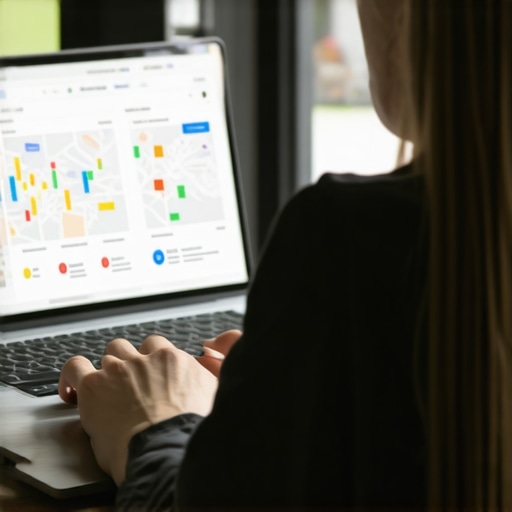
To fine-tune your efforts, monitor key metrics like click-through rates, review volume, and profile engagement. Use tools like Google Maps Insights or third-party SEO analytics to understand what’s working and what’s not. For example, I once noticed my profile’s click rate was low despite good reviews. After optimizing my photos and descriptions, I saw an immediate uptick in profile visits and calls. Regularly measuring these metrics allows you to adapt your strategy and stay ahead of competitors. Dive deeper into the essential map pack metrics at this resource.
Enhance Your Local SEO with Content and Engagement
Create local-focused content, such as blog posts about community events or local news, that subtly includes your keywords. Engage with your community through social media and local partnerships to increase your visibility and backlinks. Backlinks from local blogs or newspapers act like votes of confidence, boosting your authority and rankings. This multi-channel approach not only improves your map presence but also drives foot traffic and conversions.
Consistent Monitoring and Adjustment
Local SEO isn’t a set-and-forget task. Regularly review your metrics, update your profile, and adapt your keywords to reflect changing trends or seasons. Keep an eye on your competitors’ strategies by analyzing their profiles—what are they doing differently? Use the insights gained to refine your approach continually. For more advanced tactics, check out this comprehensive guide.
Many local business owners believe that simply optimizing their Google My Business profile and accumulating reviews is enough to rank high in the map pack. This is a common misconception, but the reality is far more nuanced. Let’s dig deeper into what most people get wrong about local map SEO and how to avoid costly mistakes.
Why focusing solely on reviews and profile completeness isn’t enough
It’s true that reviews and a complete profile are important signals, but they are just the tip of the iceberg. The real secret lies in understanding the top maps SEO metrics that influence your ranking. Many entrepreneurs overlook metrics like local relevance, keyword optimization, and citation consistency, which play a critical role in how Google perceives your authority.
For example, a business may have hundreds of reviews, but if their NAP (Name, Address, Phone number) data is inconsistent across directories, Google gets confused. This inconsistency can cause your listing to be devalued, despite your efforts elsewhere. Regularly auditing your citations and ensuring they match your GMB profile is an advanced step many neglect—yet it can significantly improve your visibility.
The trap of quick fixes and fake reviews
Another prevalent mistake is trying to game the system with fake reviews or overly optimized keywords that sound unnatural. Google’s algorithms are smarter than ever, and engaging in such practices risks penalties or banishment. Instead, focus on authentic engagement and creating genuine content around your local community. This builds trust and helps search engines recognize your relevance over time.
Additionally, some believe that optimizing for keywords alone guarantees top rankings. However, according to Google’s local ranking factors, relevance, proximity, and prominence are equally vital. Ignoring these can leave your efforts wasted, regardless of your keyword strategy.
What advanced map SEO practitioners consider
For seasoned marketers, the key is to leverage data-driven insights. Using tools like map SEO metrics analysis allows you to identify patterns and optimize your profile accordingly. For instance, tracking how your profile performs in different neighborhoods, times of day, and service categories helps refine your strategy beyond basic optimizations.
Remember, local SEO is an ongoing process. Regularly revisiting your analytics and adjusting your tactics is essential to stay ahead of competitors. If you want to master these advanced strategies, I recommend exploring this comprehensive guide.
Have you ever fallen into this trap? Let me know in the comments, and share your experiences or questions about avoiding these common pitfalls.
Maintaining a strong local map presence requires the right tools and consistent effort. Over the years, I’ve tested numerous software solutions and methods to ensure my Google Maps rankings stay high and adapt to ever-changing algorithms. In this post, I’ll share the specific tools I personally rely on, how I use them, and where I see this trend heading in the future.
How do I maintain my local SEO efforts over time?
First, it’s crucial to leverage analytics tools that track your key metrics. I regularly use this resource to understand which factors influence my rankings, such as review volume, citation consistency, and profile engagement. Google’s own Google Maps Insights provides real-time data on how users interact with my profile, including click-through rates, direction requests, and calls. These insights help me identify weak spots and opportunities for targeted improvements.
Next, I rely on citation management tools like Whitespark’s Citation Tracker. I use it to audit my existing citations, ensure NAP consistency, and discover new opportunities for local backlinks. Regularly updating and correcting citations prevents ranking penalties caused by conflicting information. For example, I make it a quarterly routine to run a citation audit, which keeps my profile trustworthy in Google’s eyes.
Content management is another pillar. I use Google My Business API to schedule posts, offers, and news updates. Consistent activity signals to Google that my business is active and relevant. I also monitor reviews using this guide to respond promptly, which boosts engagement and trust.
What about tools for ongoing optimization?
For keyword tracking and competitive analysis, I turn to Ahrefs Local. It helps me identify new keywords or local queries my competitors are ranking for, so I can refine my content and categories. Additionally, I use BrightLocal’s Local Search Grid to visualize my visibility across different neighborhoods and times of day. This helps me understand where I need to focus more effort.
Looking ahead, I believe automation and AI-driven insights will play an ever-increasing role. Tools like this resource emphasize the importance of data-driven optimization. In the future, I predict more advanced AI tools will help identify issues and opportunities faster, allowing local businesses to stay ahead without excessive manual effort.
Try this tip today
One actionable step I recommend is to set up regular citation audits using a combination of BrightLocal and map SEO metrics analysis. Keeping your NAP consistent across all directories is a foundational yet often neglected task that can significantly improve your rankings when done consistently. Incorporate this into your routine, and watch your local visibility grow.
The Hardest Lesson I Learned About Google Maps Visibility
One of the toughest lessons I encountered was underestimating the power of citation consistency. Initially, I thought piling up reviews would do the trick, but I overlooked how crucial uniform NAP data across directories truly is. When I finally audited my citations and corrected discrepancies, my rankings shot up—sometimes overnight. It taught me that behind every great map listing is a foundation of reliable, consistent data.
What I Wish I Knew About Engagement and Algorithm Signals
Early on, I believed that reviews alone would propel my business to the top. Turns out, engagement metrics like profile views, photo updates, and timely responses are equally vital. Google rewards active profiles that show real local relevance. So, don’t just ask for reviews—keep your profile lively and engaging to stay relevant in Google’s eyes.
The Power of Local Content and Community Connection
Creating community-focused content—like blogs on local events or partnerships—has been a game-changer. Not only does it attract backlinks, but it also signals to Google that your business is deeply rooted in the area. This multi-channel approach amplifies your local visibility far beyond just your Google My Business profile.
My Essential Toolkit for Map Pack Success
I rely heavily on tools like this resource for tracking key metrics and BrightLocal for citation audits. These have become my trusted allies, helping me spot issues before they impact rankings and refine my strategy continuously. Using the right tools is essential for sustained success in local SEO.
Your Turn to Try
Now, it’s your move. Focus on citation consistency, keep your profile active, and create valuable local content. The world of local map SEO is constantly evolving, but with these lessons and tools, you’re well on your way to dominating the map pack in 2024. Ready to make your business unmissable? Share your experiences or questions below, and let’s grow together!