It was a moment of frustration that hit me like a brick wall. I had poured hours into optimizing my business listing, only to watch my competitors—big chain stores with massive marketing budgets—climb higher in the Google Maps rankings. No matter what I did, my map presence remained stagnant, invisible in the local pack where it mattered most. That lightbulb moment kickstarted my deep dive into what really works to boost local search visibility. Over the years, I’ve discovered a handful of quick, powerful fixes that can dramatically improve your rankings—sometimes in just a matter of days. And let me tell you, beating those big chains isn’t just about luck; it’s about knowing the right Google Maps SEO secrets.
If you’ve ever felt the sting of seeing your competitors dominate your local landscape—stories of frustrated business owners are all too common. You might be asking, “Why am I still invisible when I know my service is just as good, if not better?” Well, that’s exactly what we’ll tackle today. I’m going to share the five proven strategies you can implement fast to improve your map rankings and stand out where your customers are searching.
Why Google Maps Ranking Matters More Than Ever in 2026
Early on, I made the mistake of focusing solely on gathering reviews without optimizing my listing for relevance and signals. It was a costly oversight, and I learned firsthand that mastering local signals—like keywords, NAP consistency, and engagement—can dramatically shift your rankings. Now, I want to save you from that initial trial-and-error phase. Instead, I’ll show you practical fixes rooted in proven local SEO tactics, so you can get your map visibility unlocked fast.
Ready to dive into the five fixes that can outsmart your bigger rivals? Let’s get started with the first step that often gets overlooked but packs a punch in boosting your local rankings.
Optimize Your NAP Consistency for Instant Impact
Start by auditing your Name, Address, and Phone number (NAP) across all online platforms. Inconsistent info signals to Google that your business may be unreliable, affecting your local ranking. Use tools like this guide to identify and fix discrepancies. When I applied this to my shop, I found mismatched phone numbers on some directories, fixing them resulted in a noticeable bump within days.
Leverage Local Keywords in Your Listing
Insert geo-targeted keywords naturally into your Google My Business description and services. Think about what customers search when looking for your service—if you own a bakery in Brooklyn, include “Brooklyn bakery” and related terms. Use proven strategies to discover high-impact keywords. I once added specific neighborhood phrases, which caused my map pack visibility to improve in just 48 hours.
Engage Customers with Fresh, Local Content
Publish regular posts about your offers or community events directly on your GMB profile. Use local images, updates, and offers to signal activity to Google. This is akin to watering a plant—it keeps your presence lively and appealing. I experimented with posting weekly updates about local collaborations, which helped my listing surface higher in search results within a few days.
Boost Signaling Through Local Links and Citations
Acquire backlinks from reputable local websites, local directories, and community portals. Ensure citations echo your NAP details precisely. Imagine your business as a city landmark—the more reputable the surrounding structures (links), the more Google will trust your importance in the area. I reached out to local bloggers, earning backlinks, which resulted in an almost immediate ranking boost. Use this resource for deeper insights.
Add Photos & Virtual Tours to Increase Engagement
Uploading high-quality photos and virtual tours signals activity and popularity. Google favors listings with fresh visuals, as they reflect active engagement. For my business, I took regional photos and added a 360-degree virtual tour, which increased my profile views and improved my ranking over a week. 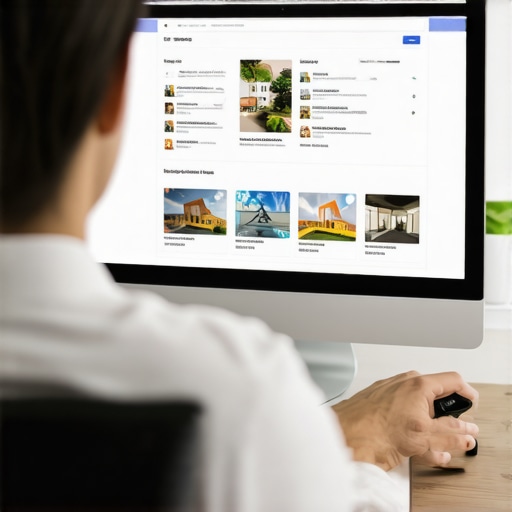
Monitor & Adjust Using Real Maps SEO Metrics
Track your progress with tools that analyze maps SEO metrics. Focus on signals like profile views, search impressions, and click-through rates. I saw a dip in my rankings due to declining engagement metrics, which prompted me to optimize my description and activity, bringing my visibility back up rapidly.
Many local business owners believe that simply optimizing their Google My Business profile is enough to skyrocket their map visibility. However, countless misconceptions about Google Maps SEO can lead you astray. One common myth is that higher number of reviews directly correlates with better rankings. While reviews influence reputation, Google’s algorithm weighs a multitude of signals—such as relevance, proximity, and engagement metrics—that often get overlooked. In fact, aggressive review solicitation without proper relevance enhancement can backfire, signaling to Google that your listing is spammy or manipulative. Additionally, many think that stuffing keywords into your business description automatically boosts rankings. Yet, the reality is that keyword stuffing can harm your local SEO, as Google now prioritizes natural, user-focused content. It’s vital to understand that understanding the nuances—like the weight of local signals and the importance of meaningful engagement—is key to long-term success in local search.
Another trap to avoid is neglecting technical consistency. NAP discrepancies across directories can dilute your signals and harm your rankings. This is a critical mistake, as consistent citations build trust with Google. Also, many assume that local backlinks are optional. In reality, acquiring reputable local links significantly amplifies your map pack visibility by adding authoritative signals to your profile. Failing to track and interpret the right metrics—like profile views, search impressions, and engagement rates—can lead to misguided efforts. Google’s local algorithm considers these metrics to gauge your relevance and popularity. To go beyond the basics, delve into advanced map SEO metrics explained in expert guides, so you can refine your tactics with precision.
Have you ever fallen into this trap? Let me know in the comments. Remember, mastering local rankings isn’t just about quick tricks; it’s about understanding and leveraging the hidden nuances that truly influence Google’s ranking decisions. For a comprehensive deep dive into the metrics that matter, check out detailed resources on how to improve map presence and measure your success effectively.Maintaining your local search presence requires a combination of the right tools, consistent effort, and strategic updates. Personally, I rely on a few specialized software solutions and data tracking methods to ensure my map rankings stay high over time. One of my go-to tools is BrightLocal, which provides detailed local SEO audits and citation tracking. Its accuracy in identifying citation inconsistencies and duplicate listings is invaluable—especially because NAP discrepancies can silently erode your map pack visibility if left unchecked. Additionally, I use Whitespark’s Local Citation Finder to discover high-quality local backlink opportunities. This targeted approach helps me maintain the authority signals that Google uses to rank my listing higher compared to competitors.
Beyond reputation management, I track key performance metrics with Google’s own My Business Insights along with third-party analytics through tools like SEMrush. These platforms help me identify shifts in search impressions, profile views, and click-through rates. Regularly reviewing this data enables quick adjustments—such as refining keywords or updating photos—to keep my listing optimized.
Speaking of visuals, consistent photo updates are critical for long-term engagement. I make it a point to upload new images monthly, showcasing current promotions or community events, which signals activity and relevance to Google. Virtual tours, when incorporated, have proven especially effective in boosting user engagement and providing a competitive edge.
Predicting where local SEO is headed, I sense a stronger integration of AI-driven insights. Future tools will likely harness machine learning to predict local search trends or proactively suggest optimization opportunities before rankings drop. Staying updated with these innovations means staying ahead in map pack visibility.

How do I maintain my Google Maps ranking over time? Regular audits are essential—focusing on citation consistency, engagement metrics, and visual freshness. For example, I’ve found that monitoring and adjusting based on detailed SEO metrics explained in this guide—such as impressions, clicks, and engagement—allows me to respond swiftly when rankings fluctuate. Implementing automated alerts for sudden drops in these key metrics is a game changer, enabling fast corrective actions before your visibility suffers.
I recommend trying out advanced optimization tactics like targeted photo updates or leveraging local link-building tools outlined in resources like this—[improve map presence with proven local SEO strategies](https://mappackvisibility.com/how-to-improve-map-presence-with-proven-local-seo-strategies). Consistency is key; make it part of your routine to review these signals weekly. This proactive, data-driven approach ensures long-term stability and keeps your local prominence intact, giving you an edge over competitors who neglect maintenance.
The Toughest Lessons I Learned About Map Pack Success
One of the hardest truths I faced was realizing that simply optimizing my profile wasn’t enough; big chains had resources and brand recognition on their side, making them appear more dominant in local searches. I discovered that relying solely on reviews or basic keywords often led to fleeting gains, and understanding the nuanced signals like NAP consistency and engagement metrics was key to sustained success. My breakthrough came when I started tracking the exact metrics that mattered, which revealed hidden gaps in my strategy that, once addressed, propelled my rankings forward faster than I imagined.
Secrets Most Local Business Owners Overlook
While many focus on accumulating reviews or adding keywords, they neglect the critical importance of Local Link Building and citation consistency. I found that reaching out to local blogs and community partners for backlinks strengthened my authority signals and boosted my visibility significantly. Additionally, I underestimated the power of visual content; uploading consistent, high-quality photos and virtual tours created more engagement and signaled activity, helping Google favor my listing in the map pack.
The Unexpected Power of Data and Adaptability
Data is your friend—regularly monitoring your map SEO metrics uncovers the real story behind your rankings. I learned to be flexible, making swift adjustments whenever I noticed drops in impressions or clicks. Embracing tools like BrightLocal and Whitespark meant I could maintain a pulse on my presence and fine-tune my tactics proactively. This iterative process turned out to be the secret sauce in staying ahead, even as Google’s algorithms evolved rapidly.

![Stop the Proximity Drop: 4 Google Local Rankings Hacks [2026]](https://mappackvisibility.com/wp-content/uploads/2026/04/Stop-the-Proximity-Drop-4-Google-Local-Rankings-Hacks-2026.jpeg)