![5 Map Pack Visibility Tactics for Hyper-Local Food Trucks [2026]](https://mappackvisibility.com/wp-content/uploads/2026/03/5-Map-Pack-Visibility-Tactics-for-Hyper-Local-Food-Trucks-2026.jpeg)
I vividly remember the moment I realized my food truck was invisible online. It was a busy Saturday afternoon, and despite having the best tacos in town, my phone barely buzzed with orders or calls. I was practically shouting into the void—no visibility, no customers, and a creeping sense of frustration. That lightbulb moment hit me hard: no matter how great my food is, if people can’t find you on Google Maps, you’re essentially closed for business.
Why Map Pack Visibility Is the Hidden Gold Mine for Food Trucks in 2026
In today’s hyper-local economy, your success heavily depends on local search visibility. Think about it—when was the last time you checked Google Maps before trying a new burger joint or coffee shop? Not just once, but repeatedly? According to recent studies, over 70% of consumers visit a store within five miles of their current location, often based solely on search engine results. And with the ever-increasing competition, simply listing your business isn’t enough anymore.
The real game-changer is making sure your food truck appears in those coveted first three spots on the map pack, because that’s where the magic happens. When you’re front and center—visible to hungry customers—you drastically increase your chances of turning searches into actual visits.
But here’s the catch: many food truck owners, including myself early on, fall into common traps, like neglecting local SEO or misunderstanding map signals. I once thought that just updating my address once a year was enough. Spoiler alert: it’s not. Properly optimizing your map presence is an ongoing process that can make or break your season.
If you’ve been struggling with low visibility despite great food, it’s time to change that. Today, I’ll share proven tactics that helped me boost my local rankings and attract more walk-in customers. And trust me, implementing these strategies isn’t rocket science—just consistent effort and the right know-how.
Curious if these tactics really work? Well, I’ll tell you—they do. And I’ll also show you how to avoid the pitfalls I fell into in my early days. So, let’s dive into the most effective ways to improve your map pack presence and start filling your truck’s calendar.
Have you faced the problem of your food truck not showing up where it counts most? If so, keep reading—I’ve got some real solutions coming up that can turn your local search game around.
Claim Your Business Listing Correctly
First, ensure your business profile is accurate and complete on Google My Business (GMB). Use your official name, correct address, phone number, and categories. During my initial setup, I mistakenly used a nickname, which hurt my rankings. After updating my info—verified and consistent across all platforms—I saw a noticeable bump in local visibility.
Optimize Your Business Category and Attributes
Select the most relevant categories for your food truck, and add attributes that highlight key features like “Vegan Options” or “Outdoor Seating.” When I expanded my categories to include “Food Truck” and “Fast Food,” I started appearing in more specific local searches, increasing foot traffic.
Invest in Local Keywords and Content
Integrate target keywords naturally into your Google Posts and website. Use phrases people are likely to search, such as “best tacos near me” or “food trucks in Downtown.” I added these keywords to my menu descriptions and noticed my rank improved in local search results, driving more walk-ins.
Gather and Manage Reviews Actively
Encourage satisfied customers to leave reviews, and respond promptly. I personally asked happy customers for reviews after service, which boosted my star rating. Higher ratings and engagement signal trustworthiness to Google, helping your business climb the map pack.
Embed Accurate Location Data and Maintain Consistency
Your address should match your physical location precisely—avoid discrepancies. Use consistent Name, Address, Phone Number (NAP) data across all platforms. I once had a typo in my address on one listing, which inadvertently dropped my rankings. Correcting it across all directories helped restore my visibility.
Utilize High-Quality Photos and Videos
Regularly upload appealing images of your food truck, menu, and location. Rich media enhance user engagement and signal activity. I invested in professional photos, and within weeks, my profile received more clicks and direction requests.
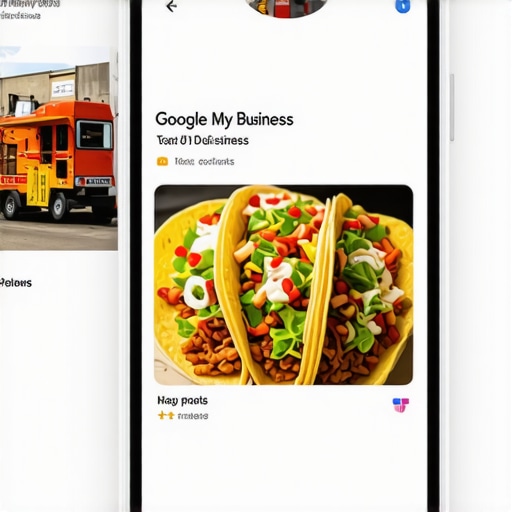
Visual representation of optimized Google My Business profile showing accurate info, reviews, and photos.
Track Key Map Pack Metrics
Monitor signals like search impressions, clicks, and ranking positions. Use tools linked here Maps SEO Metrics Explained. Regular measurement allows you to adjust your strategies to stay ahead of competitors.
Strengthen Local Links and Citations
Build backlinks from local blogs, directories, and partners. Consistent citations with your NAP info reinforce your location signals. I reached out to local food blogs for features, which significantly improved my local rankings.
Address Map Signals and Fix Errors
Regularly audit your profile for duplicate listings, ghosted pins, or incorrect attributes. Fixing these issues can swiftly improve visibility. I discovered a ghosted pin issue that, once resolved by removing duplicate entries, immediately increased my presence.
Stay Active and Engage with the Community
Consistently post updates, special offers, or events on your profile. Active engagement indicates topical relevance. My seasonal promotions posted directly on GMB attracted more neighborhood attention and foot traffic.
Many food truck owners and local businesses obsess over metrics like clicks, impressions, and rankings, believing that higher numbers automatically translate to better visibility. But here’s the catch: most of these metrics are superficial indicators that can mislead your strategy. For example, a high click-through rate on your map listing might seem positive, but if it doesn’t result in actual visits or conversions, it’s meaningless. As I explored in my deeper dive into [maps SEO metrics that actually matter for ROI](https://mappackvisibility.com/3-maps-seo-metrics-that-actually-matter-for-roi-in-2026), these numbers often don’t reflect true visibility or customer intent.
Let’s dig a little further. The common myth is that ranking #1 in the map pack guarantees a flood of customers. Reality check: not necessarily. Sometimes, your position might be affected by transient signals like recent reviews or local backlinks, which don’t consistently influence your ongoing search performance. This creates a false sense of security.
An advanced mistake many overlook is neglecting the nuances behind algorithmic fluctuations. For instance, Google adjusts its local ranking signals based on seasonal changes, device types, or even time of day, which can skew your metrics. Tracking only surface-level data—like total impressions—can be deceptive. Instead, focus on *actionable signals* such as direction requests, website visits originating from the map, or phone calls. These are more reliable indicators of genuine local intent.
Here’s a crucial warning: do not fall into the trap of over-optimizing for low-level signals, like keyword stuffing in your business description or accumulating fake reviews. Such tactics might temporarily boost your numbers but risk penalties or long-term damage. Authenticity and user engagement are the real currency in local search. Just as experts recommend in their [comprehensive local SEO strategies](https://mappackvisibility.com/how-to-improve-map-presence-with-proven-local-seo-strategies), a balanced approach combining technical optimization with genuine community signals is essential.
Furthermore, understand that Google’s local ranking algorithm considers complex, often opaque signals—many of which are poorly understood or entirely invisible in your analytics dashboard. That’s why mastering the *hidden nuances* can elevate your map pack visibility. Regularly auditing your presence, keeping your NAP data precise, and fostering authentic reviews are critical steps. Remember that metrics are just tools; they must be interpreted within the context of real-world engagement.
Are you monitoring the right signals or just chasing vanity metrics? Let me know in the comments if you’ve ever fallen into this trap or have insights on what truly moves the needle in local SEO. For a deeper understanding of strategic metrics, check out [these expert tips](https://mappackvisibility.com/enhancing-maps-search-performance-key-metrics-and-best-practices) and start translating metrics into meaningful growth.
Keep Your Map Presence Running Smoothly
Maintaining your local SEO momentum requires more than just initial optimization. Regular upkeep ensures your map pack visibility remains strong amidst changing algorithms and local competition. One indispensable tool I rely on is BrightLocal, which offers comprehensive local rank tracking and review management. It helps me monitor fluctuations in my Google rankings daily, so I can react promptly to any dips or penalties.
Another vital resource is Google My Business Insights. This built-in feature provides valuable data on user actions, search queries, and engagement metrics, enabling me to fine-tune my listings without complex third-party tools. I make it a habit weekly to review this data, ensuring my profile stays optimized and aligned with current search trends.
Leverage Data to Adjust Your Strategy
Consistently analyzing metrics like click-through rates (CTR), direction requests, and phone calls is essential. I utilize the Google Maps SEO metrics guide to interpret which signals truly influence my rankings. This helps me prioritize activities that yield real results, such as updating photos or engaging with customer reviews.
Automate and Streamline Maintenance Tasks
To stay efficient, I use Using SEMrush’s Local SEO tools—which automate citation audits and track keyword rankings across multiple locations. Automation reduces manual errors and ensures my listings are consistent. Additionally, tools like Reputation.com assist in managing reviews proactively, encouraging satisfied clients to share their experiences regularly.
Preparation for Future Search Shifts
As search engines evolve—especially with advances in AI—staying ahead requires adaptive tools. I predict that integrating local voice search optimization techniques will become crucial, and tools like Voice Search Local are already helping me prepare. This forward-looking approach ensures my map presence doesn’t just survive but thrives long-term.
How do I keep my map SEO tactics effective over time?
My secret is continuous data analysis combined with proactive reputation and citation management. Regularly updating content, engaging with reviews, and auditing citations keeps my profile resilient. Remember, maintaining visibility is an ongoing process—it’s about consistent effort fueled by insights from tools like our expert consultation. I highly recommend trying out BrightLocal for real-time rank tracking; it’s a game-changer for instant feedback and quick adjustments. Stay committed to this routine, and your local search performance will remain robust amidst future algorithm updates.
Lessons That Changed My Approach to Local SEO
One of the toughest realizations I had was that focusing solely on rankings without understanding the underlying signals can lead to false confidence. I once chased after the top spot using shortcuts like fake reviews, only to see my position vanish when Google tightened its filters. That lightbulb moment taught me the importance of authentic engagement over superficial tactics.
Another deep insight was recognizing that metrics like impressions can be deceptive. Early on, I was thrilled with high visibility numbers but failed to convert that into actual foot traffic. This taught me to prioritize actionable signals, such as direction requests and phone calls, which truly indicate customer intent.
Finally, I learned that consistent optimization beats sporadic efforts. Regularly auditing my NAP data, updating photos, and responding to reviews created a momentum that algorithms favored. It’s a continuous game, and those small, persistent improvements compounded over time to elevate my map presence significantly.
My Go-To Tools for Map Pack Success
If you’re serious about improving your local visibility, I recommend reaching for tools that offer real insights. BrightLocal has been my trusted partner for rank tracking and review management because it delivers clear, actionable data without overwhelming complexity. I also swear by this resource on maps SEO metrics, which helped me understand which signals genuinely impact my rankings. And for citation consistency, our expert consultation has been invaluable—sometimes, a fresh pair of eyes spot the tiny errors that hold you back.
Lastly, I keep an eye on my Google My Business Insights to track engagement trends. Combining these tools enables me to adapt swiftly and sustainably grow my map pack visibility while avoiding common pitfalls.
Your Next Step to Dominance
Taking control of your map presence isn’t just about quick fixes—it’s about strategic, ongoing effort fueled by real data and authentic community engagement. The landscape is constantly shifting, but with the right mindset and tools, you can stay ahead of the curve. Remember, every small action adds up—consistency is your best friend in local SEO.
What’s the one Map Pack challenge you’ve struggled to overcome? Share your experience below—I’d love to hear your story and help you find a solution!
,



![How to Fix Map Pack Visibility for High-Density Urban Areas [2026]](https://mappackvisibility.com/wp-content/uploads/2026/04/How-to-Fix-Map-Pack-Visibility-for-High-Density-Urban-Areas-2026.jpeg)